BumpSync
Pregnancy apps are built for one parent. This one is built for two.
- 9×couples who connect are 9× more likely to still be using it a month later
- +70%sign-ups month on month from organic search (July 2026)
- 3 platformsiOS, Android and web from one codebase
Pregnancy apps are built for one person
Having a baby is a two-person job. The apps aren’t. The partner hears everything second-hand, and the real decisions (the name, the pram, who does the night feed) end up in WhatsApp.
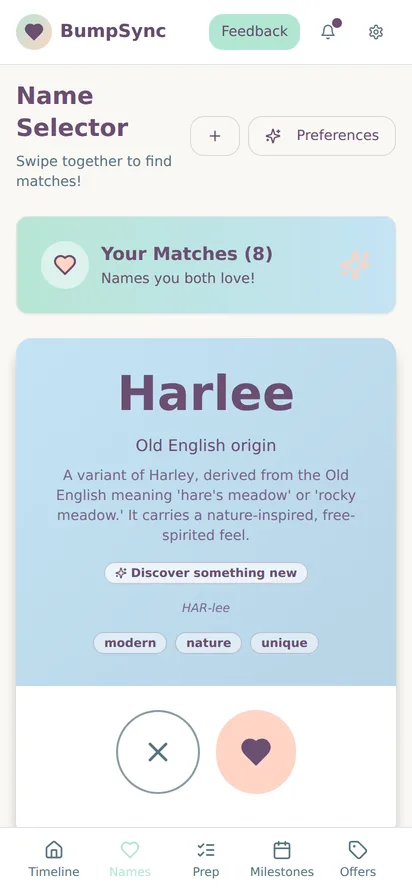
Names got couples in
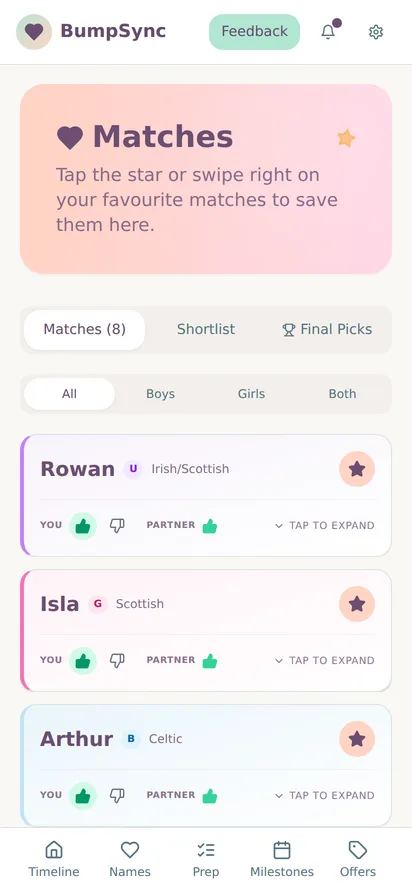
Picking a name is the one decision every couple enjoys arguing about. Each parent swipes on their own phone. Only the names you both like show up.
Couples stayed. Solo users didn’t.
A month after sign-up, 37% of connected couples were still using BumpSync. Solo users: 4%. Fewer than a third ever invited their partner.
That changed the roadmap. More features wouldn’t fix retention. Getting the second parent in would.
So 2.0 was built around the partner
- Invite during setup, tracked as its own funnel. It used to sit in settings.
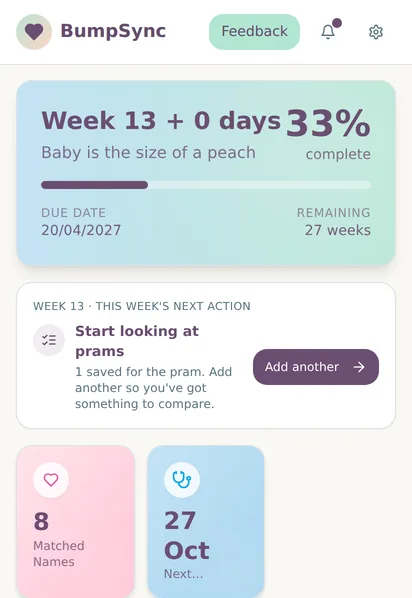
- A weekly email and nudges timed to the week of pregnancy.
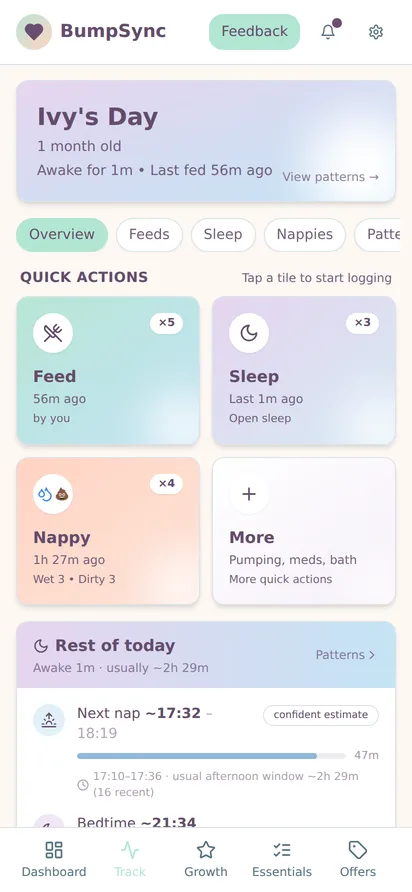
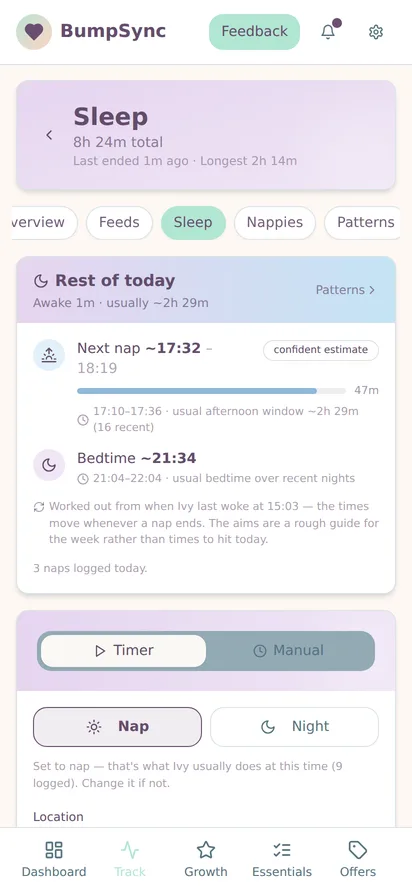
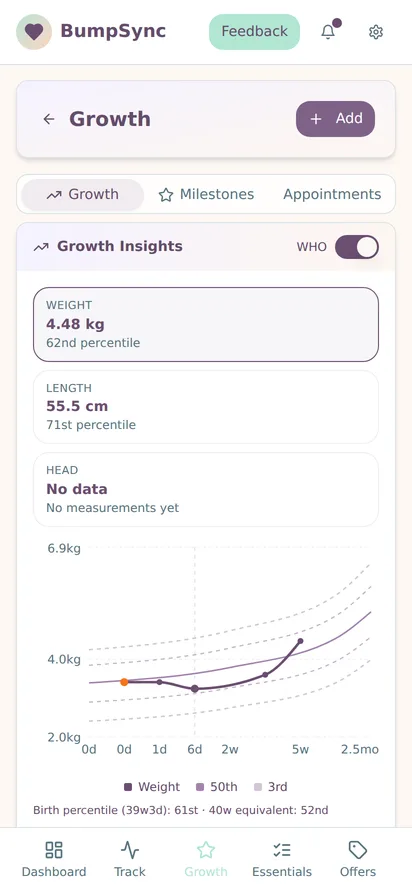
- Shared baby tracking after the birth: feeds, sleep, nappies and growth. Your partner sees the 3am feed without asking.
- Products inside the prep lists, where the decision is made, not on a separate offers page.
What live users broke
- 7 of 32 invited partners were being dropped into new-user setup. Caught by a performance review, reproduced with a scripted QA run, fixed.
- An early “lift” turned out to be iOS users on the old build. Every analytics event now carries the app version.
- A parent said the bedtime suggestion ignored the last nap. Now it doesn’t.
Built with React, TypeScript, Supabase, Capacitor, Vercel, Amplitude.